> ## Documentation Index
> Fetch the complete documentation index at: https://docs.textql.com/llms.txt
> Use this file to discover all available pages before exploring further.
# What is Ontology?
> Learn what ontology is and how it helps ensure consistent, accurate answers across your organization
**For Non-Technical Users:** This guide provides a high-level overview of ontology concepts and how to use an ontology that's already been set up by your team. If you're a technical user looking to build and configure ontology, check out our [How It Works > Ontology](/core/how-it-works/ontology/overview) section for detailed technical documentation.
## What is Ontology
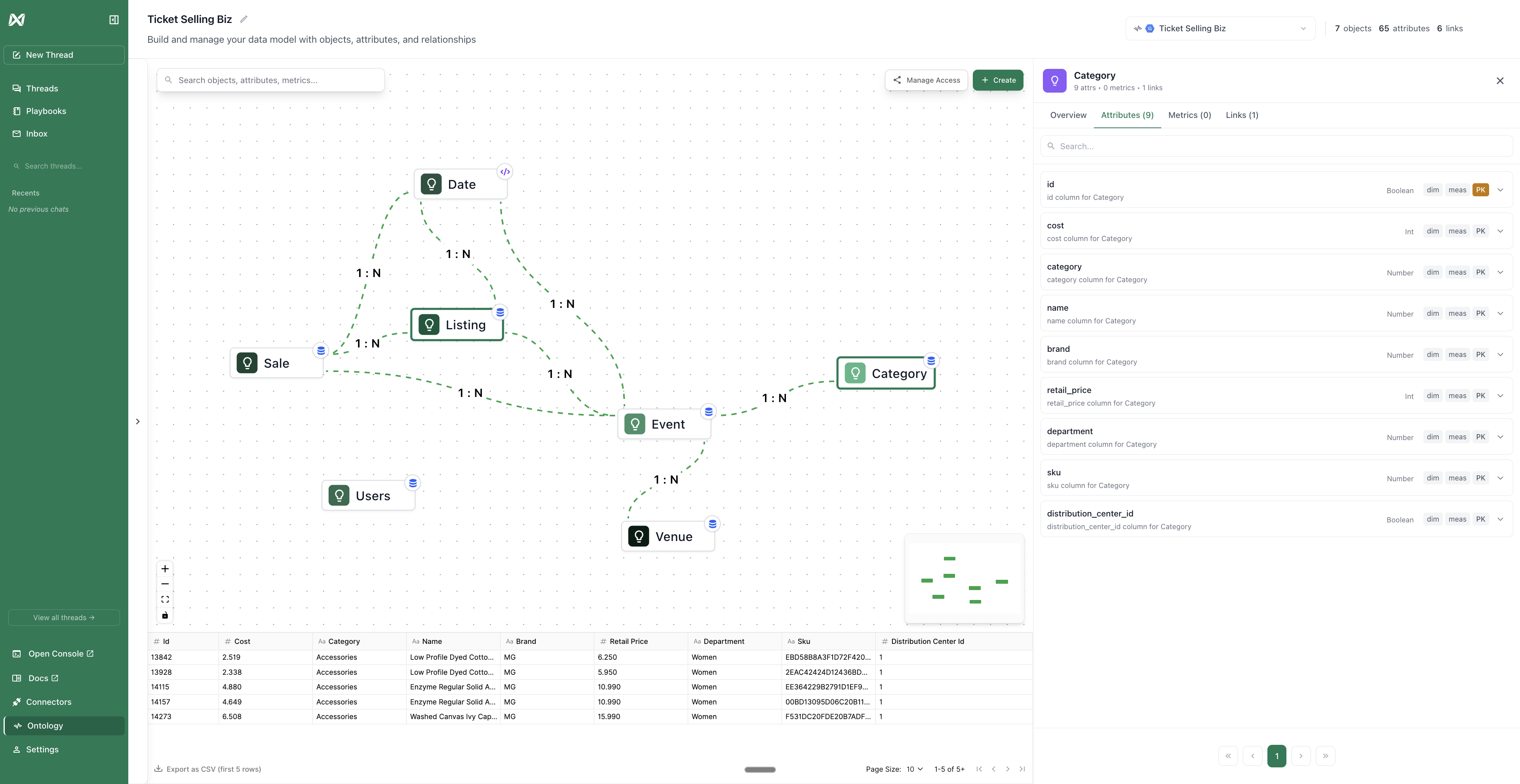
Think of ontology as a business dictionary for your data. Ontologies tell Ana exactly what things mean in your business, so everyone gets consistent answers.
 ## The Problem It Solves
Imagine three people calculating "total revenue" and getting three different numbers:
* Person A includes refunds
* Person B only counts completed orders
* Person C uses gross revenue before discounts
With ontology, you define "Total Revenue" once. Everyone uses the same calculation and gets the same answer.
## A Simple Analogy
* **Without Ontology:** Like asking someone to cook dinner without a recipe. They'll figure it out, using their best intuition.
* **With Ontology:** Like giving someone a cookbook. The recipe for "Total Revenue" is written down, tested, and ready to use. Anyone can follow it and get the same result.
**Note:** The majority of organizations do not need an ontology setup. Ana will tell you what assumptions she made.
## The Problem It Solves
Imagine three people calculating "total revenue" and getting three different numbers:
* Person A includes refunds
* Person B only counts completed orders
* Person C uses gross revenue before discounts
With ontology, you define "Total Revenue" once. Everyone uses the same calculation and gets the same answer.
## A Simple Analogy
* **Without Ontology:** Like asking someone to cook dinner without a recipe. They'll figure it out, using their best intuition.
* **With Ontology:** Like giving someone a cookbook. The recipe for "Total Revenue" is written down, tested, and ready to use. Anyone can follow it and get the same result.
**Note:** The majority of organizations do not need an ontology setup. Ana will tell you what assumptions she made.