

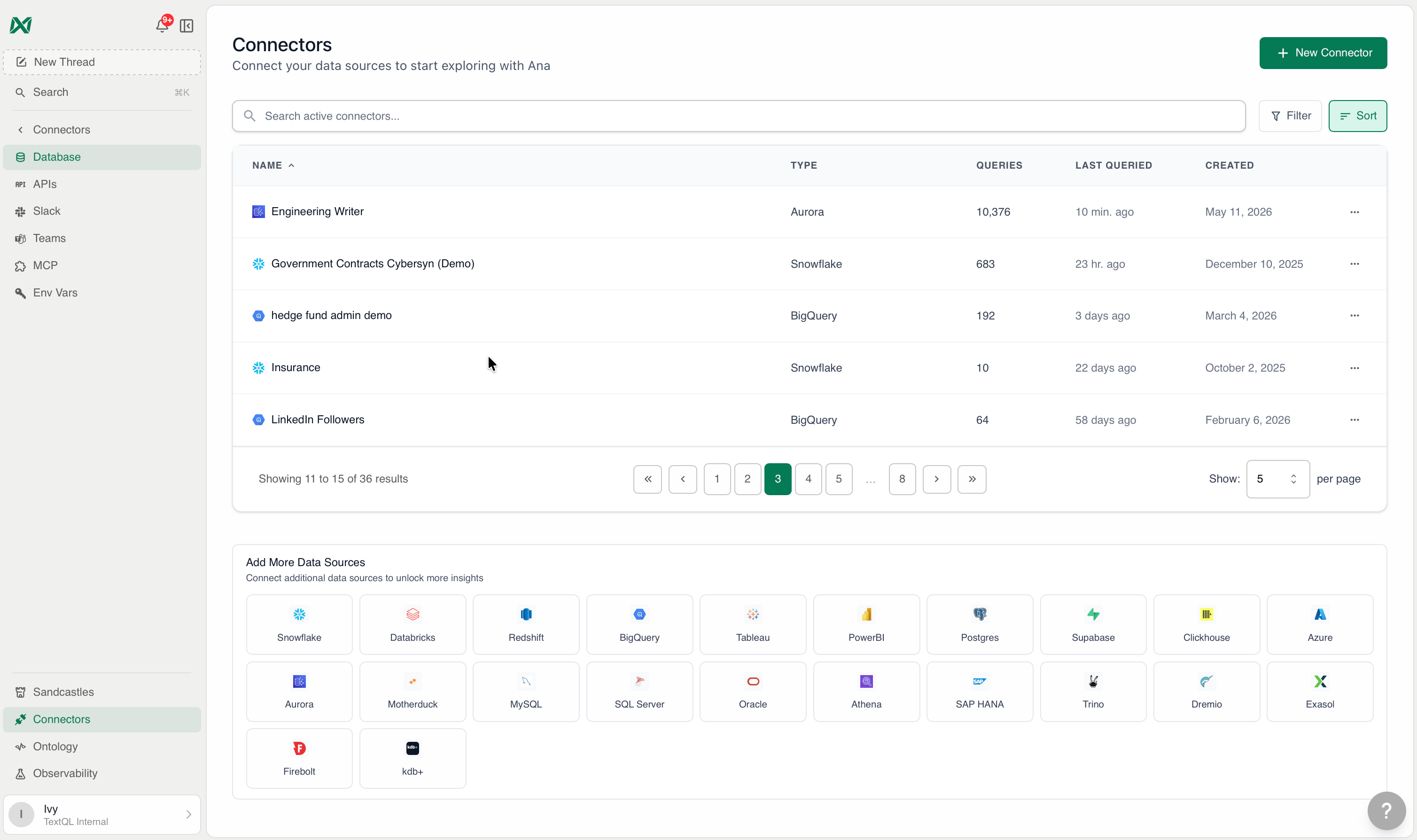
TextQL Connectors Page
Permissions
Actions on the Connectors Page are gated by theconnector:write permission. Users without this permission can still view and use connectors, but the following actions will be hidden or disabled:
By default, members have
connector:write on public connectors. Admins always have full access. Anyone who can edit a connector can also manage who has access to it, including assigning roles to it. Picking roles in the share dialog requires role:read, which the default member role includes. See Role-Based Access Control for details on configuring connector permissions.
Connector Explorer
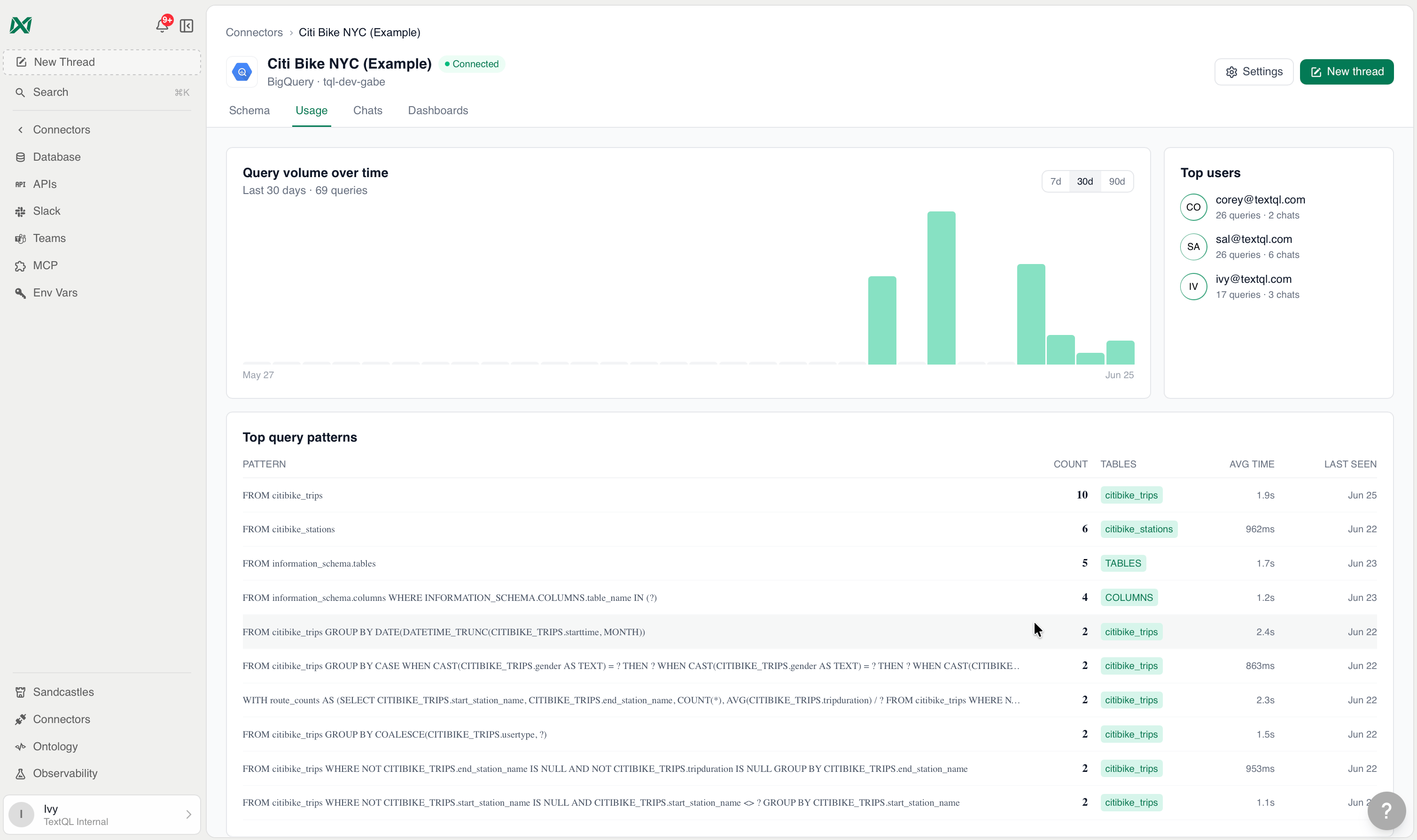
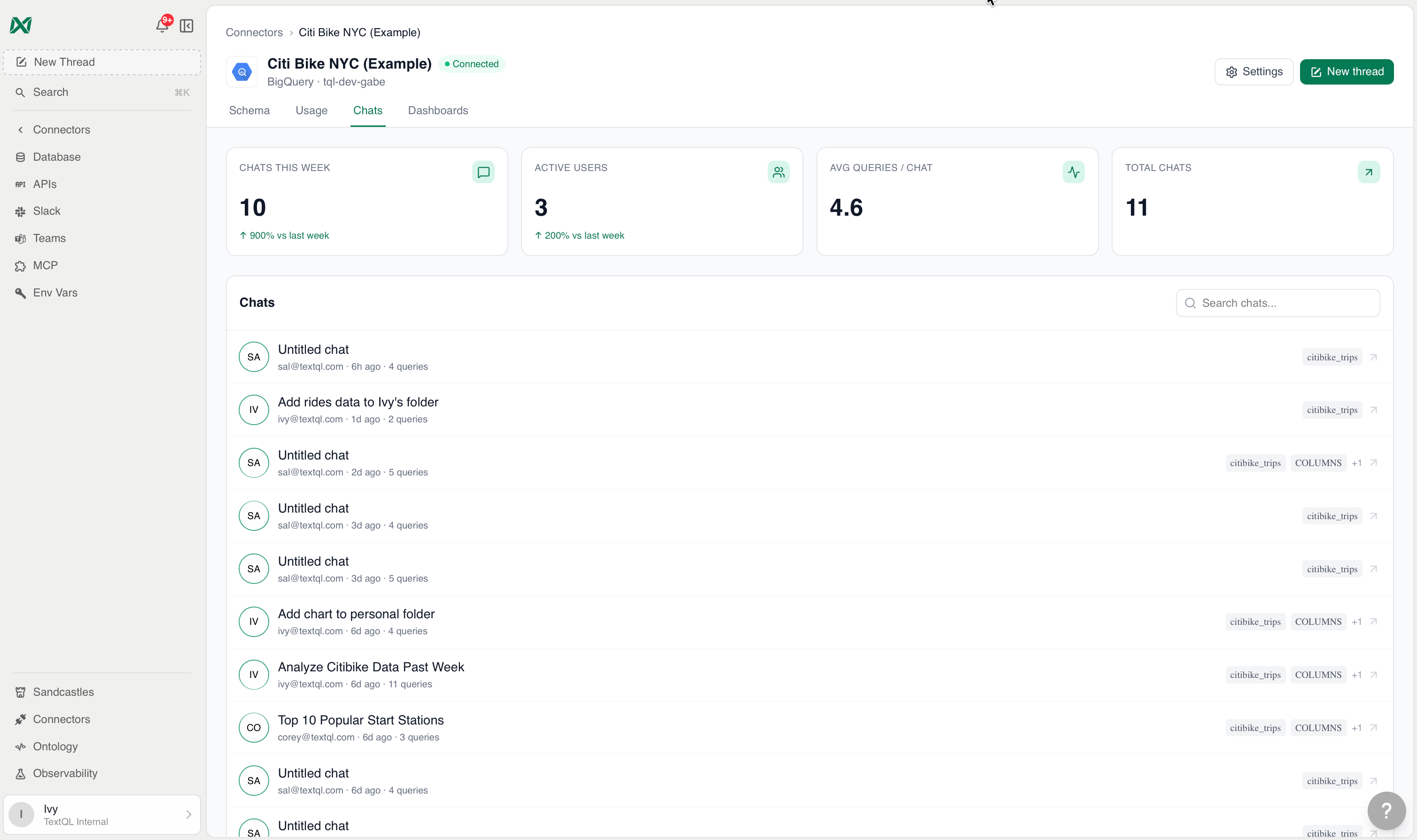
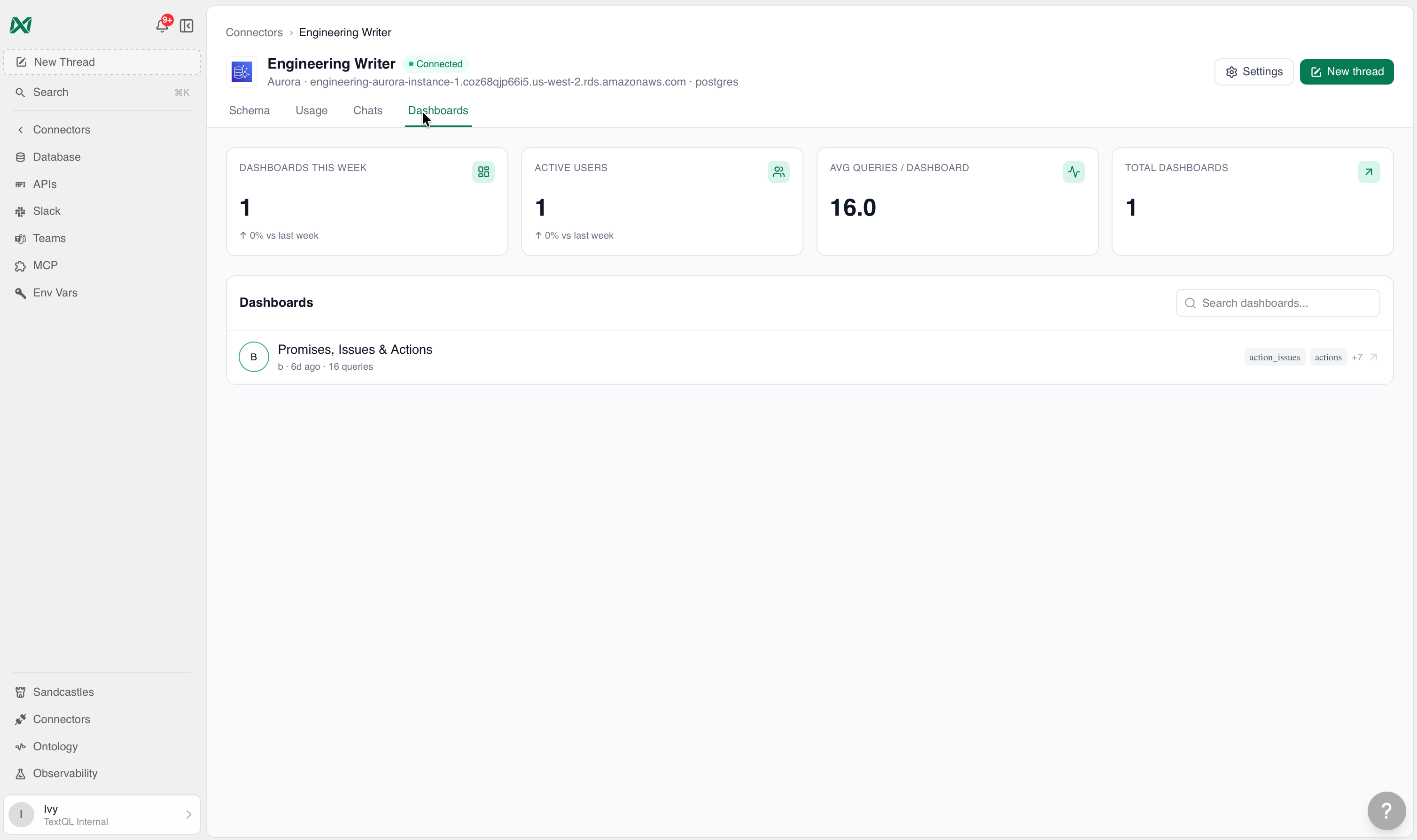
Each connected data source has a dedicated detail page. Click any connector to open its Explorer, which answers four questions that previously required manual investigation.- Schema
- Usage
- Chats
- Dashboards
A live, searchable browser of the connector’s table tree. Click any table to inspect its columns, types, primary keys, and a preview of actual rows — no external SQL client needed.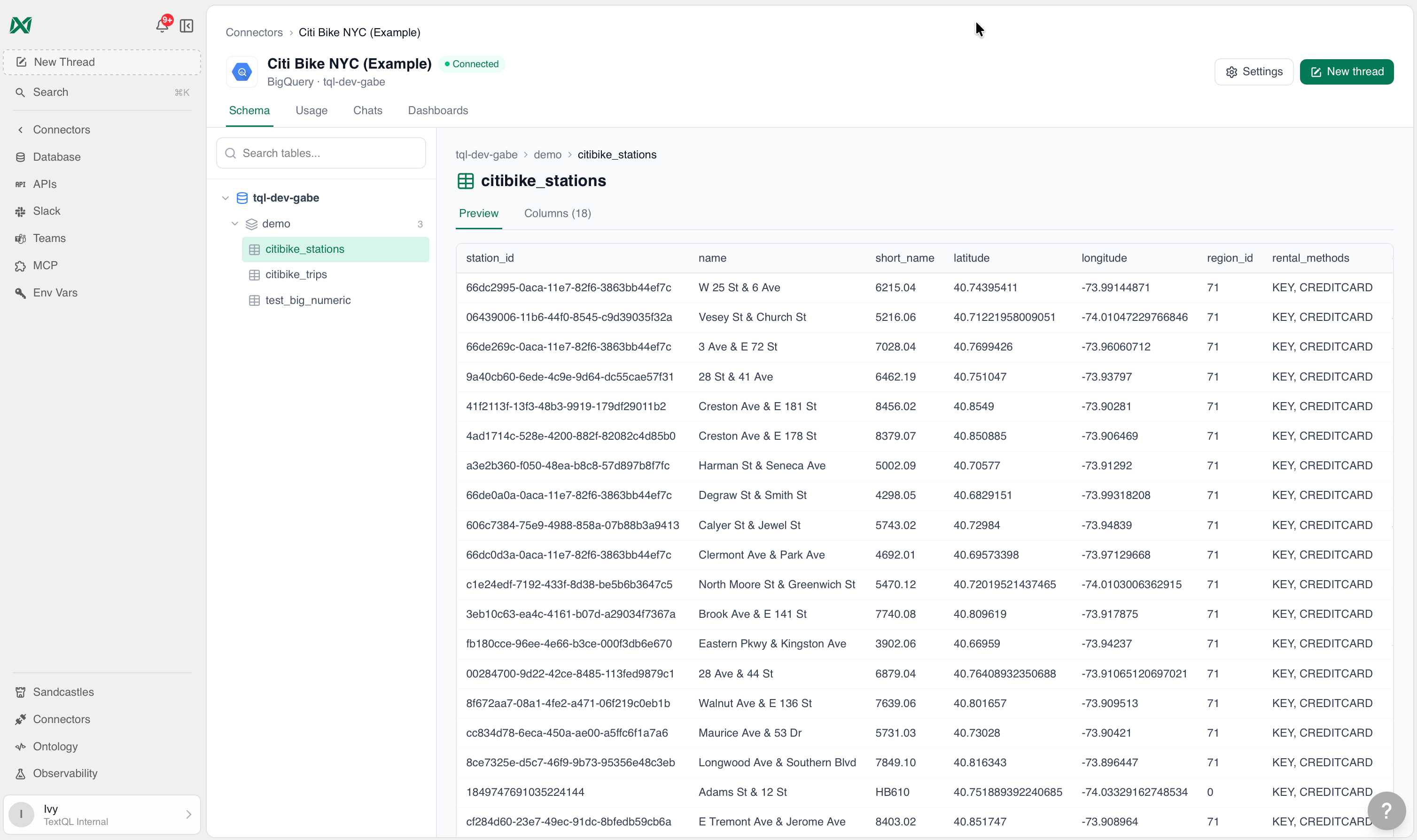
Supported Datasources
Data Warehouses & Databases
APIs
Business Intelligence
Adding New Connectors
Navigate to the Connectors Page and select New Connector, then choose your data source from the form that appears.The New Connector button is only visible to users with the
connector:write permission.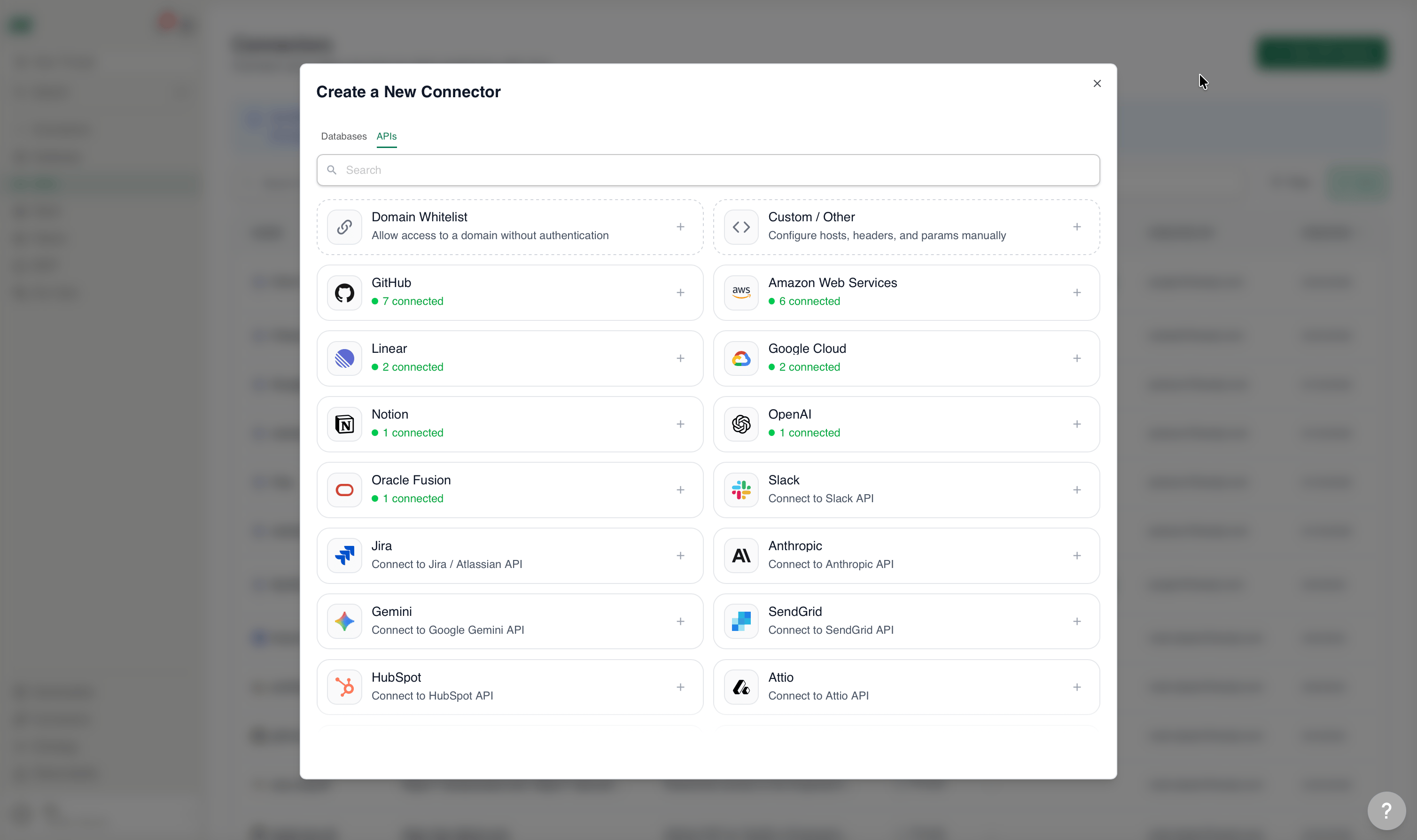
Click 'New Connector' and select your desired data source
Databases & Warehouses
Snowflake, BigQuery, Redshift, Databricks, PostgreSQL, and more
APIs
Salesforce, HubSpot, Slack, Linear, GitHub, and more
Business Intelligence
Tableau and Power BI
Network Configuration
Firewall and IP allowlist setup for all database providers
Network Configuration
Most database connectors require whitelisting TextQL’s IP addresses in your firewall or security group. See the Network Configuration Guide for instructions covering AWS, Azure, Google Cloud, Databricks, and other providers.VPC and Private Deployments: IP whitelisting does not apply to VPC, on-premises, or single-tenant deployments. Contact your TextQL representative for custom deployment network requirements.
Questions and Troubleshooting
- Check the Network Configuration Guide for firewall setup
- Review the connector-specific troubleshooting section for your data source
- Contact us at support@textql.com